

Cat6A Cable Speed, Max Length and Diameter Explained
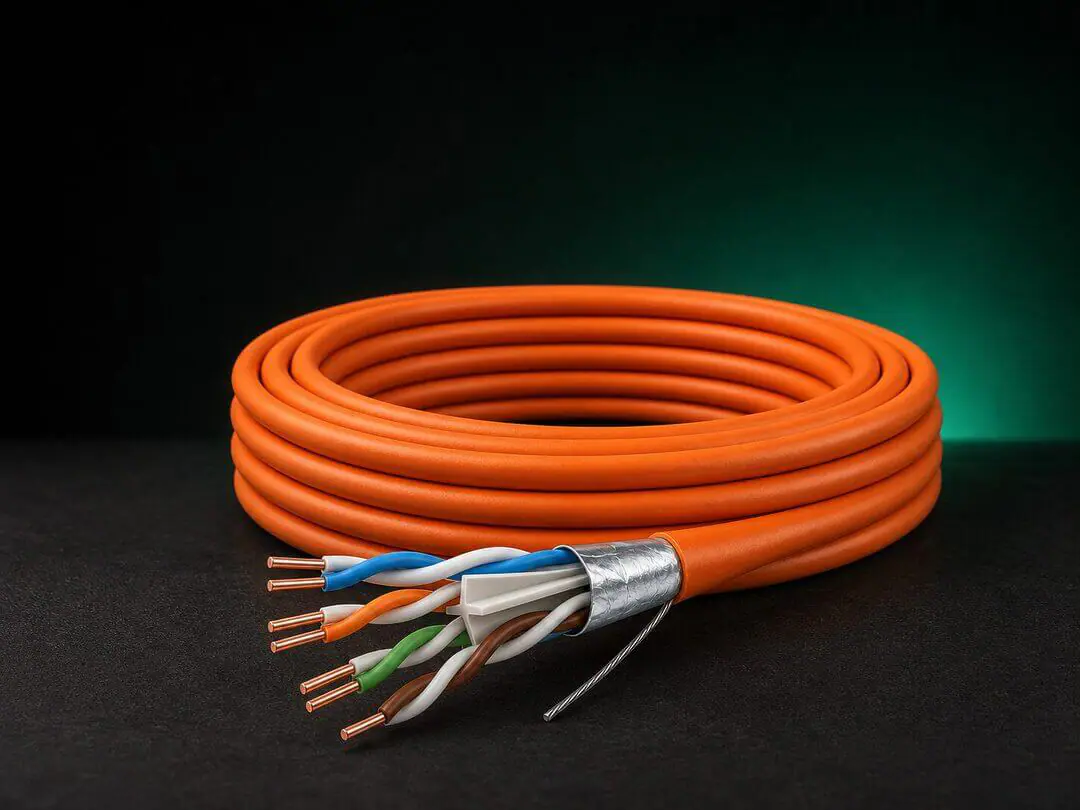
Cat6A (Category 6 Augmented) is the copper cable most projects now specify for new structured cabling, because it carries 10 Gbps Ethernet over the full 100 m channel. This guide explains Cat6A cable speed, the maximum length rules and the typical cable diameter of each construction, and how they compare with Cat6.
Cat6A cable speed
Cat6A is specified up to 500 MHz and supports 10GBASE-T (10 Gbps) over a full 100 m channel. It also runs every slower Ethernet speed (100 Mbps, 1 Gbps, 2.5 Gbps and 5 Gbps), so it suits Wi-Fi 6/6E/7 access points, PoE devices and switch uplinks for many years.
| Cat6 | Cat6A | |
|---|---|---|
| Bandwidth | 250 MHz | 500 MHz |
| 1 Gbps (1000BASE-T) | 100 m | 100 m |
| 10 Gbps (10GBASE-T) | about 37–55 m, depending on installation and alien crosstalk | 100 m |
| Typical use | desk outlets at 1 Gbps | 10 Gbps links, Wi-Fi access points, PoE, future-proof backbones |
Cat6A maximum length
The maximum length is the same as for other twisted-pair categories: a 100 m channel, made up of a 90 m permanent link (the fixed cable from patch panel to outlet) plus up to 10 m of patch cords in total at both ends.
- Keep the solid horizontal cable within 90 m and use short, good-quality Cat6A patch cords.
- Longer runs need a switch in between or a fibre link; adding length beyond 100 m reduces signal margin and can cause errors at 10 Gbps.
- Large cable bundles carrying high-power PoE run warmer, which can reduce the usable length; follow the cable manufacturer’s bundling guidance.
Cat6A cable diameter
Cat6A cable is thicker than Cat6 because it needs extra pair separation and/or screening to control alien crosstalk at 500 MHz. Typical outer diameters for 23 AWG constructions are:
| Construction | Typical outer diameter |
|---|---|
| Cat6 U/UTP (for comparison) | about 5.8–6.5 mm |
| Cat6A U/UTP (unshielded) | about 7.0–8.0 mm |
| Cat6A F/UTP (overall foil) | about 6.8–7.5 mm |
| Cat6A U/FTP (foil on each pair) | about 6.5–7.5 mm |
| Cat6A S/FTP (braid + foiled pairs) | about 7.0–8.0 mm |
These are typical ranges; the exact diameter of each TMT Global cable is on its product datasheet. Diameter matters for containment fill, conduit sizing and bend radius (usually at least four times the cable diameter once installed).
Which Cat6A construction to choose
- Cat6A U/UTP: unshielded; simplest to terminate; good for offices with separation from power cables.
- Cat6A F/UTP and U/FTP: foil screening for better noise immunity in dense or electrically busy areas.
- Cat6A S/FTP and F/FTP: the highest screening, for data centres, industrial sites and runs near motors or VFDs.
- Choose LSZH jackets inside buildings and PE jackets for outdoor or duct runs.
Frequently asked questions
Is Cat6A faster than Cat6?
Both can carry 10 Gbps, but Cat6 only manages it over shorter runs (about 37–55 m). Cat6A carries 10 Gbps over the full 100 m channel and has twice the bandwidth (500 MHz).
Can I run Cat6A more than 100 m?
Not within the standard. For longer distances use a switch to split the run, or use a fibre optic link.
Do I need shielded Cat6A?
Not always. U/UTP Cat6A works well in most offices; screened versions are better where cables run near power, motors or other noise sources, or in large bundles.
Related TMT Global guides and products
- Cat6A network cables (all constructions)
- Network cable selection guide: Cat6 or Cat6A, screening and jacket
- Network cabinet sizing guide
Need datasheets or a quotation for a project? Contact TMT Global.